Recycling & Recovery
Responsible end-of-life recovery of HDPE, steel and pallets.
When a tote has genuinely reached the end of reuse, we recover its materials instead of landfilling them. Bottles are cleaned and reground into HDPE pellets, steel cages go to metal recovery, and pallets are repaired or chipped.
Why it’s greener
Recycling is our last resort, not our first — but when a tank is done, zero-landfill recovery keeps its materials circulating.
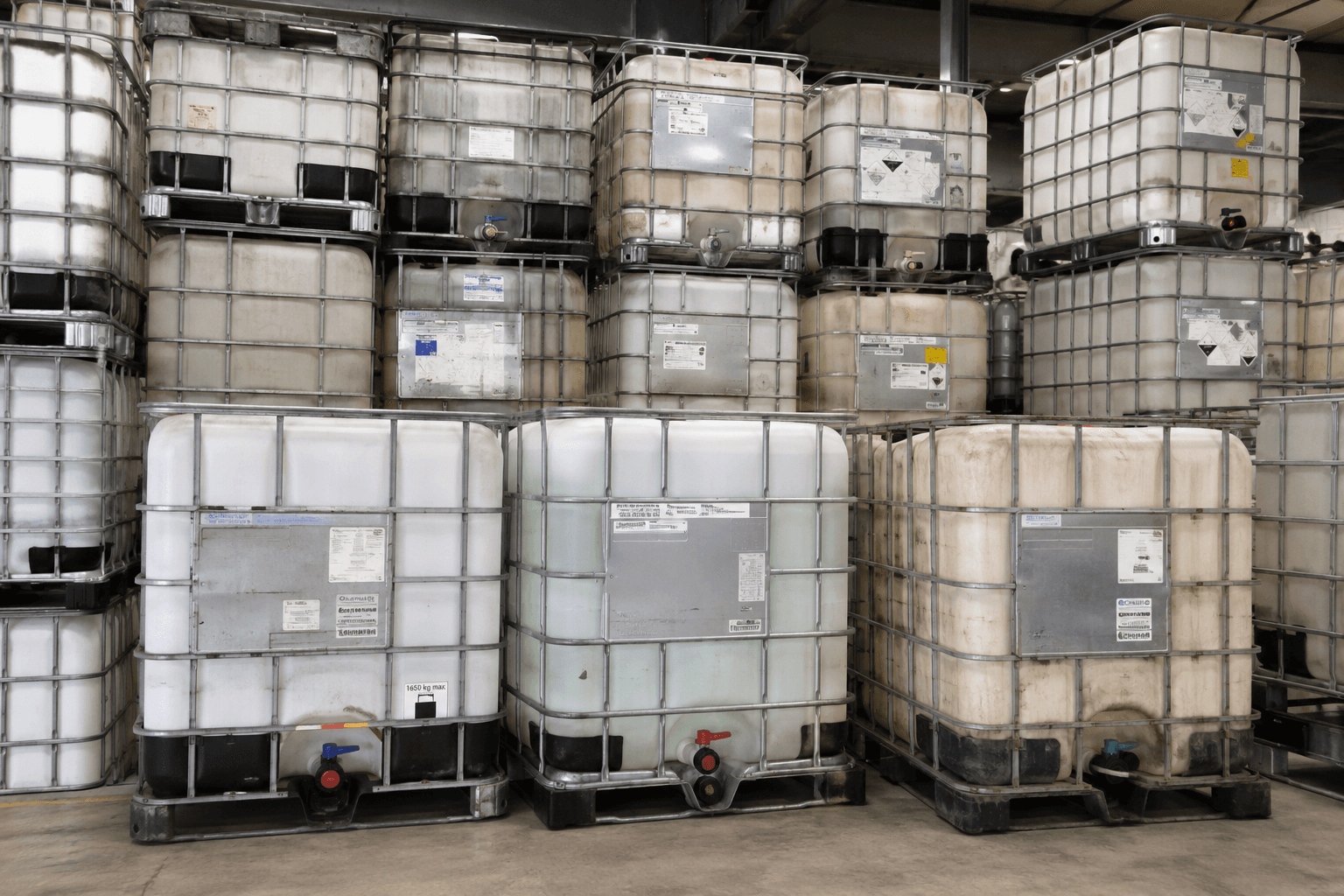
Recycling is our last resort, not our first — but when a tote has genuinely reached the end of reuse, we recover its materials instead of landfilling them. Bottles are cleaned and reground into HDPE pellets, steel cages go to metal recovery, and pallets are repaired or chipped. You get documentation for your sustainability reporting and the confidence that nothing usable was thrown away.
Before anything is shredded, we confirm the tank truly cannot be washed, rebottled or upcycled. Only tanks that have exhausted their reuse potential enter the recovery stream — which is exactly what keeps our landfill number at zero.
Assess
We confirm the tank truly cannot be reconditioned or upcycled.
Separate
Bottle, cage and pallet are split into clean material streams.
Recover
HDPE regrind, steel recovery and pallet repair close the loop.
- HDPE bottles reground into pellets
- Steel cages sent to metal recovery
- Pallets repaired or chipped, never dumped
- Documentation for your sustainability reporting
Every step, explained.
Here’s exactly what happens from the moment you reach out to the moment the job is done.
Reuse assessment first
Every tank that arrives for recycling is first evaluated for reconditioning or rebottling potential. If any reuse path is viable, we take it — recycling is the fallback, never the default.
Contaminant and material check
We verify prior contents and assess residual contamination. Heavily contaminated HDPE may require decontamination before it can enter a clean regrind stream.
Disassembly by material stream
The bottle is separated from the steel cage; the cage is separated from the pallet. Each component enters its own recovery stream — no cross-contamination.
HDPE bottle recovery
Bottles are cleaned, granulated and reground into HDPE pellets that go to plastics processors as a manufacturing feedstock — not a disposal cost, but a recovered resource.
Steel cage recovery
Steel cages are baled and sent to metal recyclers. Steel is infinitely recyclable with no loss of quality — the cage keeps its value even at end of life.
Pallet recovery
Wooden pallets are repaired and returned to service where possible. Unrecoverable pallets are chipped for biomass fuel or mulch — not landfilled.
Documentation and reporting
You receive a material recovery record showing weight by stream (HDPE, steel, wood). Use it directly in your sustainability report, carbon disclosure or supplier questionnaire.
Everything in this service
Assessment to confirm reuse is truly exhausted
HDPE bottles reground into pellets
Steel cages sent to metal recovery
Pallets repaired or chipped, never dumped
Zero-landfill handling
Documentation for your sustainability reporting
What this service doesn’t cover
We’d rather be upfront than have you discover a gap after the fact. Here’s what falls outside this service — and we’ll refer you if you need it.
- Hazardous-waste disposal for highly contaminated tanks (requires a licensed HW facility — we’ll refer you)
- Recovery of non-IBC plastic or metal waste streams
- On-site shredding or processing at your facility
Information we need from you
The more detail in your first email, the faster and more accurate your quote.
- Prior contents for every tank — required for safe material routing
- Quantity of tanks for logistics and documentation planning
- Whether you need documentation for a specific reporting framework (GRI, CDP, internal)
- Location for route scheduling
From request to done
Assess
We confirm the tank cannot be reconditioned or upcycled.
Separate
Bottle, cage and pallet are split into clean material streams.
Recover
HDPE regrind, steel recovery and pallet repair close the loop.
What goes into the number.
We quote every job individually by email. Here are the variables that shape what you’ll see in that quote — no surprises.
- Volume — larger lots spread fixed costs and improve economics
- Contamination level — more contaminated HDPE requires more prep before regrind
- Distance from Peoria for route pickup
- Documentation complexity — standard record vs. certified audit-trail report
What you receive.
Every transaction generates documents. Here’s what you’ll have for your records, procurement file or sustainability report.
- Material recovery record by weight and stream (HDPE, steel, wood)
- Confirmation that no material was landfilled
- Recycling certificate for ESG or supplier documentation
- Pickup and chain-of-custody confirmation
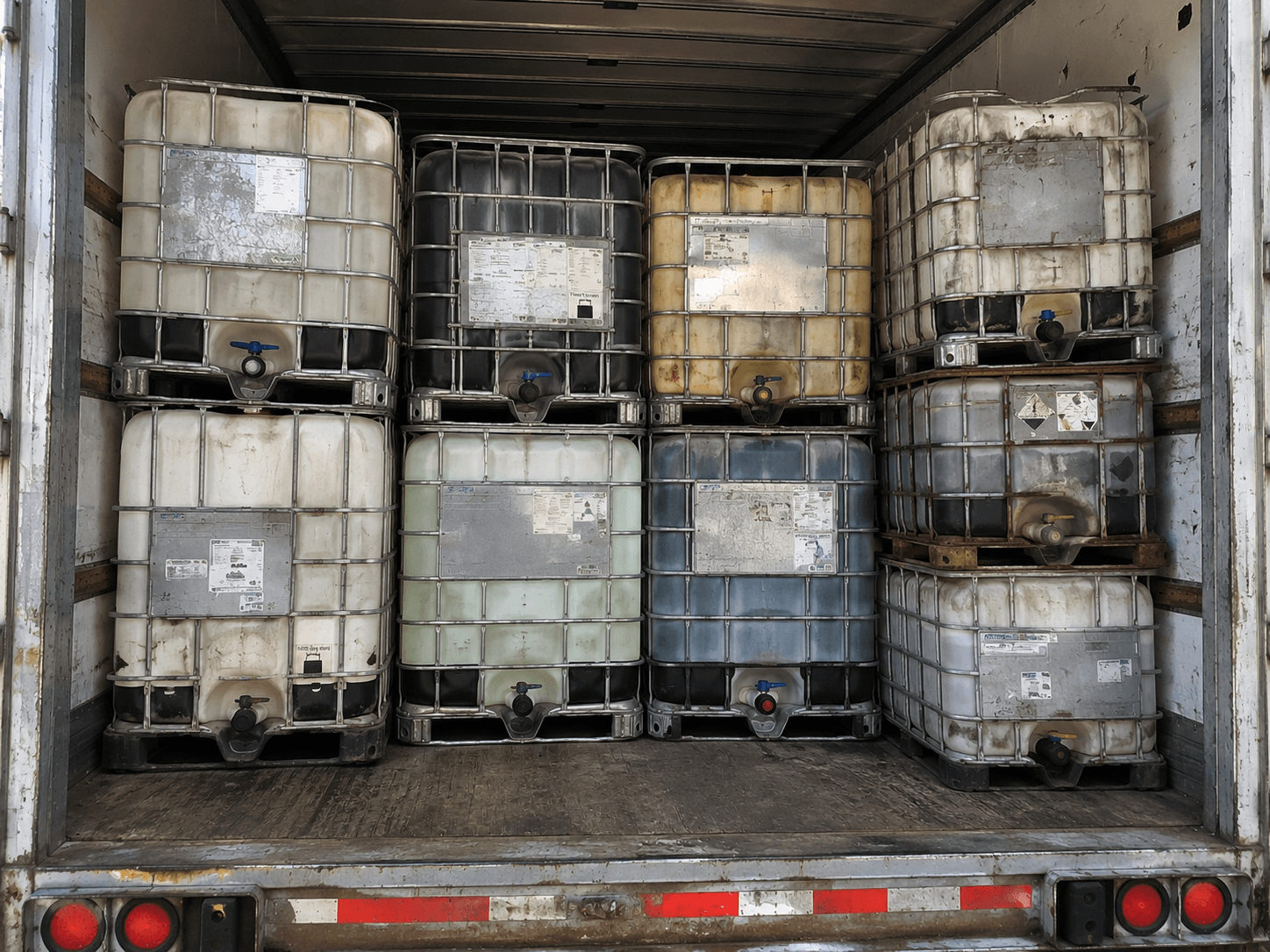
How we keep things safe, documented and audit-ready.
Safety practices
- All tanks with hazardous-residue contents are handled with appropriate PPE and are decontaminated before processing
- HDPE that cannot be decontaminated to regrind standard is routed to licensed hazardous-waste recovery, not shredded into the clean stream
- Steel cage cutting and baling follows standard metal-recycling safety protocols
- Pallet chipping uses guarded industrial equipment; personnel maintain exclusion zones
Compliance notes
- HDPE regrind from totes that held regulated substances may require decontamination under Illinois EPA rules before entering commerce
- Material recovery documentation can satisfy requirements under EPA’s Sustainable Materials Management framework
- Recovery records are formatted to align with GRI 306 (Waste) and CDP supply-chain disclosures
- Zero-landfill certification is based on third-party downstream partnerships — we can share facility names on request
We do the whole job. In-house. Documented.
Email-first quoting
Every request gets a written quote within one business day — quantity, grade, delivered price and lead time in a single reply. No phone tag, no vague "call for pricing."
In-house full lifecycle
We buy, recondition, transport and recycle in one operation. No middlemen. No outsourced reconditioning that we can’t verify. The tank you get is the tank we processed.
Documented to the tote
Grade tags, prior-contents disclosure, pressure-test records and bills of lading travel with every unit. Your QA team and auditors get the paper trail they need.
Reuse-first philosophy
We recondition before we recycle, and we recycle before we landfill. That’s the correct order — and it’s how we run every tank that comes through the yard.
Real sustainability numbers, not marketing fluff.
Reuse beats recycling. Recycling beats landfill. We operate that hierarchy on every tank, every time — and we give you the documentation to prove it to your auditors.
Steel saved per cage reused
The steel cage and pallet are the heaviest, most carbon-intensive parts of an IBC. Every reuse cycle avoids remaking them from ore.
Per tote vs. ~50 drums
An IBC replaces 5–7 drums per trip, slashing packaging count, handling time and transport emissions at once.
Landfill goal for end-of-life tanks
HDPE reground, steel recovered, pallets repaired or chipped. When a tank is truly done, every component still has a next life.
Documented reductions
Reconditioning and recycling records support your Scope 3 Category 1 and Category 4 packaging emissions reporting.
Midwest coverage from a central Peoria hub.
Peoria hub location
Geographically central to Illinois and within a day’s drive of Chicago, St. Louis, Indianapolis, Des Moines and Milwaukee — one hub that reaches the full Midwest efficiently.
Backhaul route optimization
Deliveries and empty pickups are batched onto shared routes. You rarely pay for a trip that runs one-way.
Full truckload to single tote
40-tote truckloads for volume buyers; LTL for smaller orders. The freight rate reflects your quantity accurately.
Reverse logistics built in
When you’re done with tanks, we’re already running routes near you. Pickup scheduling integrates with delivery planning.
Recycling & Recovery — FAQs
Do you landfill anything?
How do I know reuse was really exhausted?
Can I get recycling documentation?
Will you collect end-of-life tanks?
What happens to the HDPE regrind?
Do you handle totes that held hazardous chemicals?
Can recycling documentation count toward our ESG or Scope 3 reporting?
What if a tote has mixed materials I’m not sure about?
Request a quote for Recycling & Recovery.
Email us your specs. We reply within one business day with a real price, grade options and a lead time — no phone required.
From the IBC Journal
Other services
Buy IBC Totes
Reconditioned, food-grade and new tanks in stock and ready to ship.
Sell Your Totes
Turn idle empties into cash and free up your yard.
Reconditioning & Reprocessing
Triple-wash, inspect, re-bottle and pressure-test — done right.
Transport & Logistics
Pickup, delivery and reverse logistics across the Midwest.
Ready to keep some steel in the loop?
Get a same-week quote to buy, sell, recondition, ship or recycle IBC totes across the Midwest.